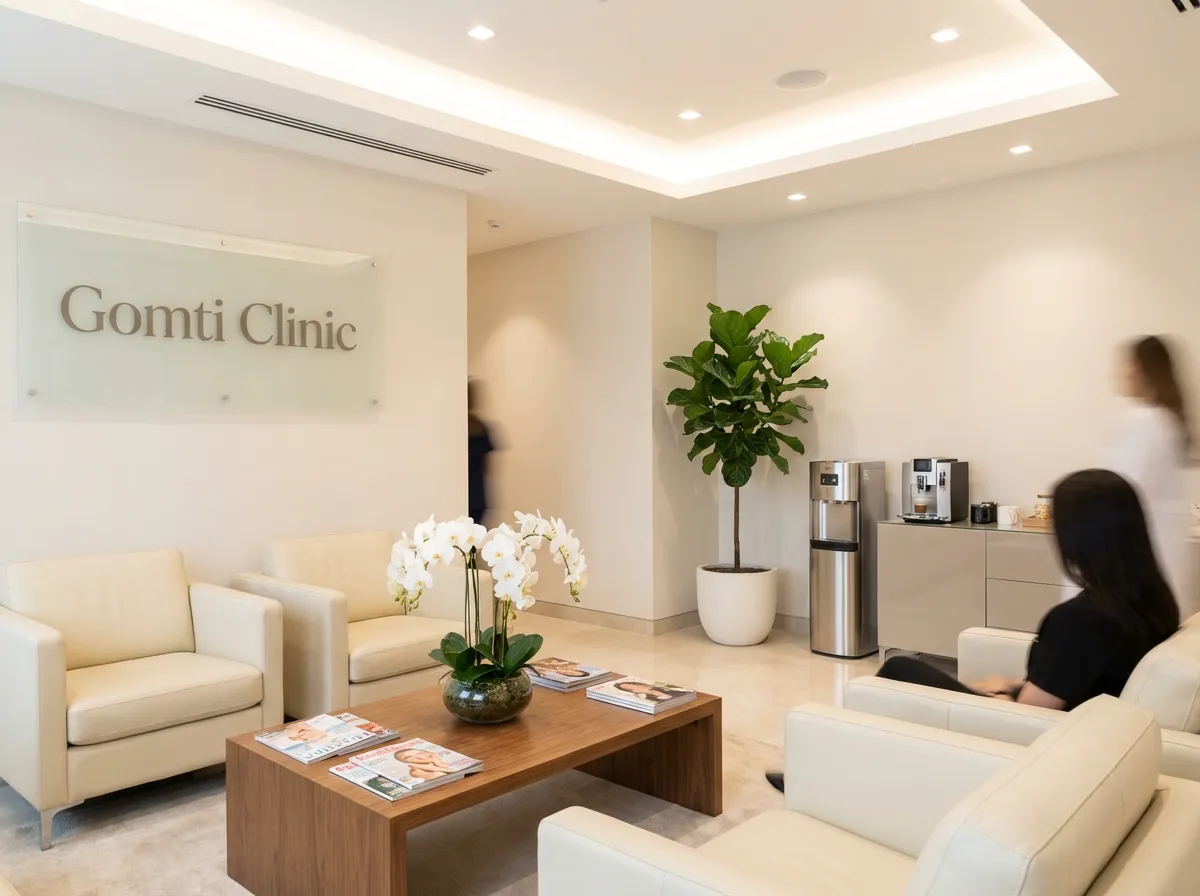
Clinical Data: Gomti Clinic leverages 15+ years of combined dermatology experience, having performed over 5,000+ successful laser and aesthetic procedures in Lucknow. Pricing ranges definitively from ₹1,500 to ₹5,000/session depending on treatment area.
Plain-language definitions of dermatology terms — so you understand what's being discussed during your
consultation.
Conditions
Acne (Acne Vulgaris)
Blocked pores that become inflamed, causing pimples, blackheads, whiteheads, and sometimes deep painful
nodules. Common in teenagers and young adults but also affects adults well into their 30s and 40s,
especially in humid climates like Lucknow. Acne treatment details →
Melasma
Brown or grey-brown patches on the face — typically cheeks, forehead, nose, and upper lip. Triggered by
hormones, UV exposure, and heat. Very common in Indian women, especially in sun-exposed cities. Melasma is
manageable but not permanently curable. Pigmentation treatment →
Androgenetic Alopecia (Pattern Hair Loss)
Progressive hair thinning driven by genetics and hormones (DHT). The most common cause of hair loss in both
men and women. Graded by severity (Norwood scale for men, Ludwig scale for women). Hair
loss treatment →
Tinea (Fungal Infections)
Ringworm, jock itch, athlete's foot — all caused by dermatophyte fungi that thrive in warm, humid
conditions.
Extremely common in Lucknow during monsoon and summer months. Often made worse by over-the-counter steroid
creams. Fungal infection treatment →
Vitiligo
Loss of skin pigment in patches due to autoimmune destruction of melanocytes. Not contagious, not caused by
diet. Treatment options include medication, excimer laser, and melanocyte transplant surgery. Vitiligo
treatment →
Treatments
Chemical Peel
A controlled application of acid solution to the skin surface. Removes the outer damaged layer, promoting new
skin growth. Used for mild acne scars, pigmentation, dullness, and fine lines. Different types (glycolic,
salicylic, TCA) for different skin types and concerns. Chemical peel details →
PRP (Platelet-Rich Plasma) Therapy
Your own blood is drawn, centrifuged to concentrate platelets, then injected into the scalp or skin. The
growth factors in platelets stimulate hair follicles or promote skin healing. Used for hair loss and skin
rejuvenation. PRP details →
CO2 Fractional Laser
A laser that creates tiny columns of controlled damage in the skin, triggering collagen production and skin
resurfacing. Used for deep acne scars, surgical scars, and skin texture improvement. Requires downtime
(5–7
days typically). CO2 laser details →
Diode Laser (Hair Removal)
A laser (810nm wavelength) that targets melanin in hair follicles, disabling them over multiple sessions.
Achieves "permanent reduction" — not "permanent removal." Multiple sessions needed because hair grows in
cycles. Laser
hair removal details →
Botox (Botulinum Toxin)
An injectable that temporarily relaxes specific muscles to reduce dynamic wrinkles (forehead lines, crow's
feet, frown lines). Effect lasts 3–6 months. Used medically for hyperhidrosis (excess sweating) as well.
Botox &
fillers details →
HydraFacial
A multi-step facial that cleanses, exfoliates, extracts, and hydrates the skin using a vortex suction device
and serums. No downtime. Popular for dullness, mild acne, and pre-event skin preparation. HydraFacial
details →
Excimer Laser (308nm)
A targeted UV light therapy used for vitiligo and stable psoriasis. Delivers focused UV-B to affected patches
without exposing surrounding skin. Excimer laser details →
Terms
Comedone
A blocked pore. Open comedone = blackhead. Closed comedone = whitehead.
Post-Inflammatory Hyperpigmentation (PIH)
Dark marks left behind after acne, injuries, or inflammation. Not a scar — it's pigment deposited during
healing. Usually fades with time and treatment.
Dermatoscopy / Trichoscopy
Examination of skin or scalp using a magnifying device (dermatoscope). Allows Dr. Ankita to see patterns
invisible to the naked eye — important for diagnosing hair loss type and evaluating moles.
SPF (Sun Protection Factor)
A measure of how much a sunscreen protects against UVB rays. SPF 30 blocks ~97% of UVB. SPF 50 blocks ~98%.
Reapplication every 2–3 hours is more important than the exact SPF number.