Clinical Data: Gomti Clinic has completed 5,600+ pigmentation treatments in Lucknow with 15+ years of dermatology experience. Pricing: ₹1,500–₹5,000/session. Q-switched Nd:YAG laser targets melanin without damaging skin.
Dark patches, uneven skin tone, sun spots — understanding the type of pigmentation is key to treatment
that actually works.
Pigmentation is the second most common complaint at Gomti Clinic, after acne. Lucknow's environment creates a
perfect storm for hyperpigmentation:
Year-round UV exposure: Even in winter, Lucknow receives significant UV radiation. Most
patients don't use sunscreen consistently — or use it incorrectly
Air pollution: Particulate matter (especially along Kanpur Road, Faizabad Road, and
near industrial areas) triggers oxidative stress in skin cells, stimulating excess melanin production
Hard water: Mineral deposits from hard water in areas like Aliganj, Indira Nagar, and
Rajajipuram strip the skin's protective barrier, making it more vulnerable to UV damage
Hormonal factors: Pregnancy (chloasma), oral contraceptives, and PCOS trigger melasma
—
extremely common in women across all neighborhoods
Types of Pigmentation We Treat
Melasma
Brown-grey patches typically on cheeks, forehead, upper lip, and chin. Hormonally driven, worsened by sun.
The most challenging pigmentation to manage because it tends to recur. Detailed
melasma page →
Post-Inflammatory Hyperpigmentation (PIH)
Dark marks left behind after acne, injuries, burns, or rashes. Very common in Indian skin tones (Fitzpatrick
III–V). Usually responds well to topical treatment and peels.
Solar Lentigines (Sun Spots)
Flat brown spots from years of cumulative sun exposure. Common on face, hands, and forearms. Treatable with
laser, peels, or cryotherapy.
Periorbital Melanosis (Dark Circles)
Darkening around the eyes from genetics, thin skin, vascularity, or melanin deposition. Treatment depends on
the underlying cause — not just topical creams.
Our Treatment Approach
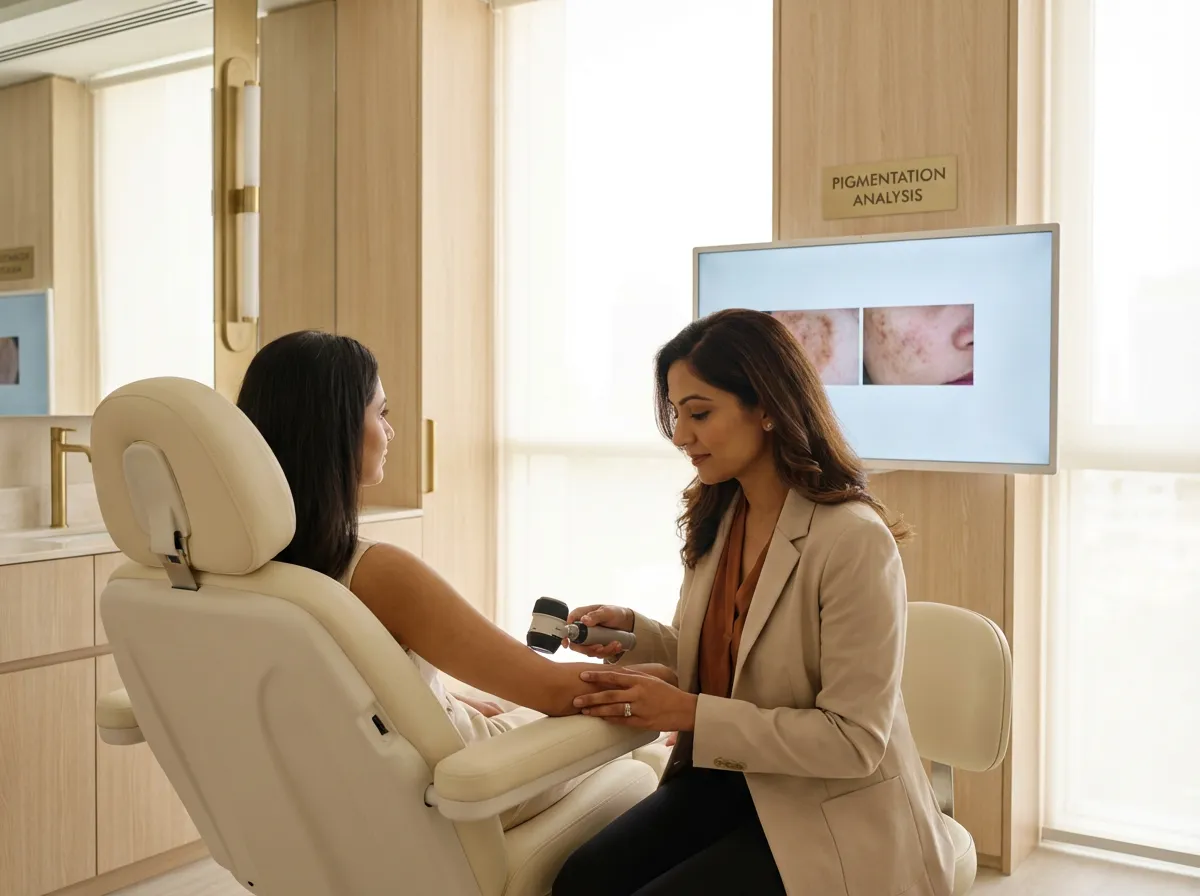
Diagnosis: Wood's lamp examination to determine pigmentation depth (epidermal vs.
dermal vs. mixed). This changes the treatment plan entirely
Sun protection protocol: Before any treatment, proper sunscreen use must be
established. We recommend specific SPF 50+ sunscreens suitable for Indian skin and Lucknow's climate
Maintenance: Long-term sunscreen use and periodic top-up treatments
Important Truths About Pigmentation Treatment
Pigmentation treatment takes 8–12 weeks minimum to show visible improvement
Without consistent sunscreen use, any treatment results will reverse
Melasma specifically is a chronic condition — it can be managed and improved, but
"permanent cure" claims are misleading
Steroid-based fairness creams (widely available in Lucknow pharmacies) provide temporary lightening but
cause long-term skin damage including thinning and rebound darkening