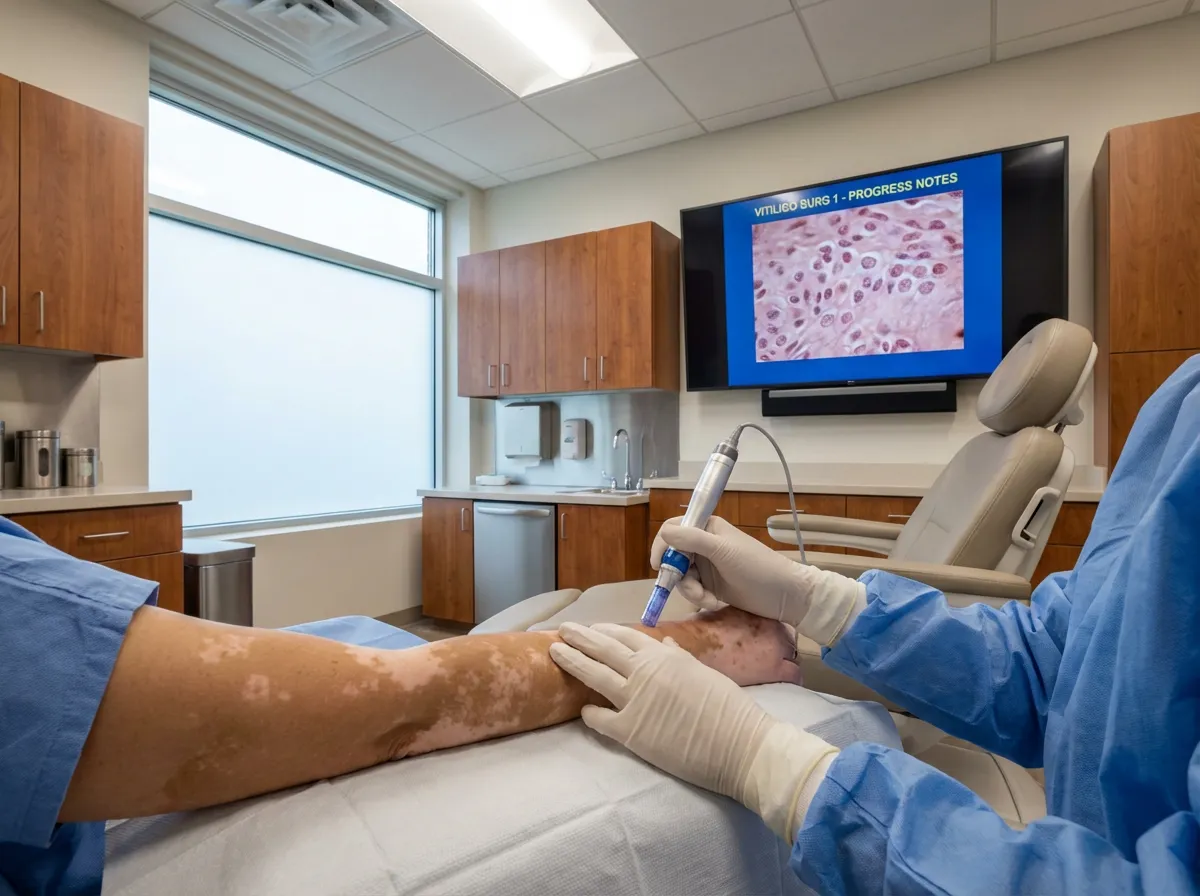
Phototherapy — Medical-Grade Light Therapy for Chronic Skin Conditions
Sunlight causes skin cancer. Controlled medical UV treats skin diseases. The difference? Dose, wavelength, and precision. That's what phototherapy is about.
Consult Dr. AnkitaWhat Is Phototherapy?
Phototherapy exposes skin to specific ultraviolet (UV) wavelengths under controlled medical conditions. The most common type — Narrowband UVB (311nm wavelength) — suppresses the overactive immune response causing conditions like vitiligo, psoriasis, and eczema. It's the same principle as "sunlight helps my skin condition" — but with a precise, measurable dose rather than uncontrolled sun exposure that risks burns and long-term UV damage.
Conditions Treated
| Condition | How Phototherapy Helps | Sessions Needed |
|---|---|---|
| Vitiligo | Stimulates melanocyte migration and repigmentation | 36-72 sessions (2-3× per week) |
| Psoriasis | Suppresses immune overactivity, slows skin cell turnover | 25-40 sessions |
| Atopic dermatitis (eczema) | Anti-inflammatory effect, reduces itch | 20-30 sessions |
| Alopecia areata | Immune modulation to stop hair follicle attack | 30-50 sessions |
The Process
You stand in a phototherapy cabin (a booth with UV lamps surrounding you) for a precise duration — starting at seconds and gradually increasing to minutes. Eyes are always protected with UV-blocking goggles. Genital area shielded. The dose is calibrated to your skin type and gradually increased based on response.
Each session takes 5-15 minutes of actual UV exposure. Total appointment time is about 20 minutes. Sessions are typically 2-3 times per week for 3-6 months. It's a commitment — but for conditions with limited treatment options (especially vitiligo), phototherapy offers repigmentation rates of 50-70% in responsive patients.
Phototherapy vs Excimer Laser
The excimer laser delivers the same wavelength (308nm) but targets specific patches rather than the whole body. Advantages: higher intensity, fewer sessions for small areas, no exposure to uninvolved skin. Disadvantages: impractical for extensive disease. At Gomti Clinic, we use excimer laser for localized vitiligo and phototherapy cabin for widespread disease.
Frequently Asked Questions
Is phototherapy the same as a tanning bed?
No — completely different. Tanning beds use UVA light (tanning wavelength) at uncontrolled doses. Phototherapy uses narrowband UVB at precisely calibrated, medically supervised doses. Different wavelength, different purpose, different safety profile.
Can phototherapy cause skin cancer?
The risk with narrowband UVB is extremely low — far lower than PUVA (an older phototherapy type). Long-term studies show no significant increase in skin cancer risk with NB-UVB phototherapy at standard protocols.