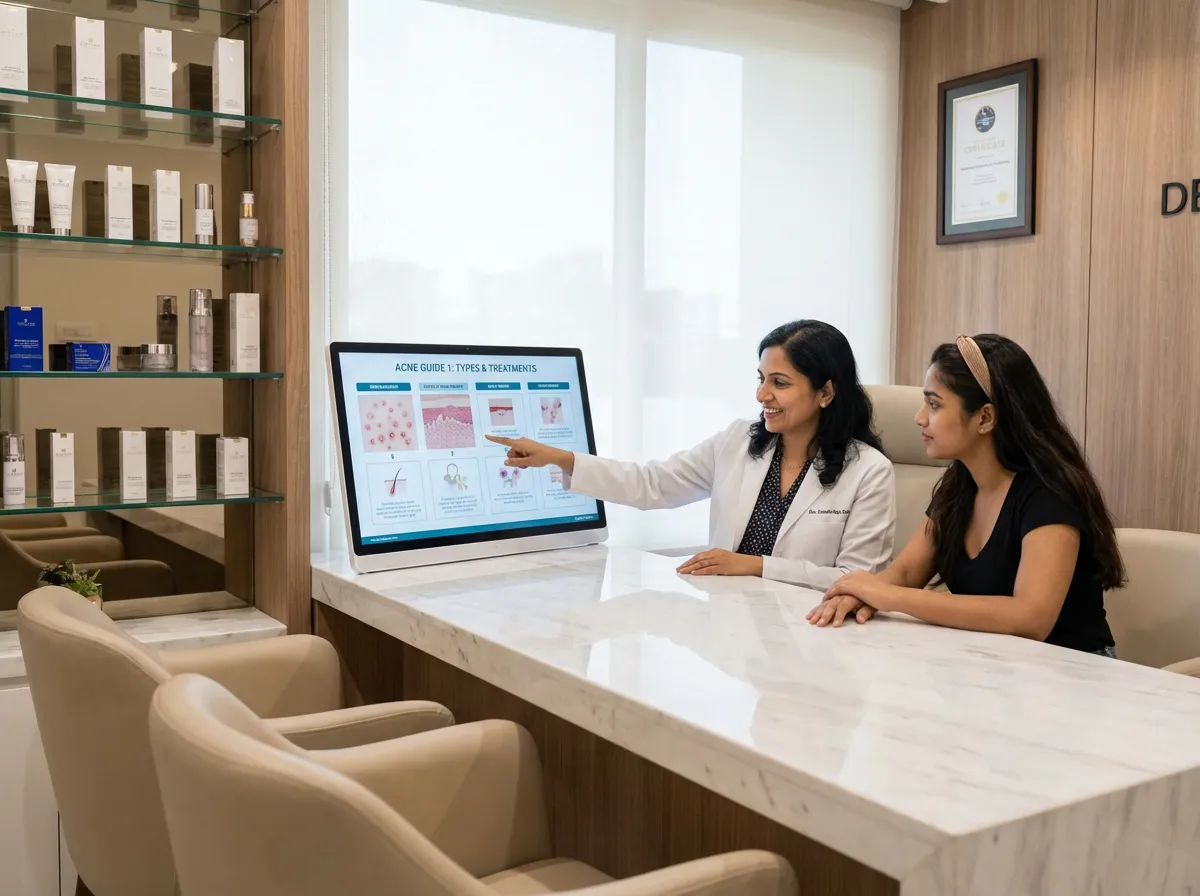
Isotretinoin Safety Guide — The Most Powerful Acne Drug Explained
It clears severe acne permanently in 80% of patients. But it requires monitoring, informed consent, and medical supervision. Here's everything you need to know.
Consult Dr. AnkitaWhat Isotretinoin Actually Is
Isotretinoin (sold as Accutane, Isotroin, Tretiva) is a vitamin A derivative that fundamentally changes how your oil glands function. It shrinks sebaceous glands by 80%, reduces oil production, prevents pore clogging, and has anti-inflammatory properties. It's the only acne medication that addresses all four causes of acne simultaneously. Nothing else comes close.
For severe cystic acne — the kind that leaves scars, causes pain, and destroys self-confidence — isotretinoin is often the only treatment that provides lasting resolution. Dr. Ankita prescribes it when topical treatments and antibiotics have failed, or when the acne is severe enough that waiting for milder treatments to work would result in permanent scarring.
Who Is It For?
- Severe cystic or nodular acne that hasn't responded to antibiotics
- Moderate acne that's actively scarring (we don't wait for more scars to form)
- Acne that relapses every time antibiotics are stopped
- Patients who've been on antibiotics for more than 6 months (antibiotic resistance is a real concern)
The Side Effects — Honest Assessment
| Side Effect | How Common | Management |
|---|---|---|
| Dry lips | 100% (everyone) | Lip balm constantly — carry it everywhere |
| Dry skin | 90% | Heavy moisturizer twice daily, gentle cleanser |
| Dry eyes | 40% | Artificial tears, avoid contact lenses |
| Muscle/joint aches | 20-30% | Reduce exercise intensity, stay hydrated |
| Elevated liver enzymes | 10-15% | Monthly blood tests; dose adjustment |
| Elevated triglycerides | 15-20% | Regular monitoring; dietary modification |
| Initial acne worsening (purge) | 30% | Expected; usually resolves by week 4-6 |
The Mental Health Question
Let's address this directly. Early reports linked isotretinoin to depression and suicidal thoughts. This was widely publicized, creating significant fear. Subsequent large-scale studies — including systematic reviews of thousands of patients — have NOT confirmed a causal link. In fact, many studies show that successfully treating severe acne IMPROVES mental health because the acne itself was the primary cause of depression.
That said, we monitor actively. Dr. Ankita checks on mood and wellbeing at every monthly visit. If any mood changes occur — whether related to isotretinoin or not — we address them. This monitoring is a safety net, not an admission that the drug causes depression.
Our Monitoring Protocol
- Baseline blood work — liver function, lipid panel, complete blood count, pregnancy test (for women)
- Monthly blood tests — liver enzymes and lipids for the first 3 months, then every 6-8 weeks if stable
- Monthly clinic visits — skin assessment, side effect review, dose adjustment, mental health check
- Pregnancy prevention — mandatory contraception for women of childbearing age. Isotretinoin causes severe birth defects. This is non-negotiable.
Frequently Asked Questions
How long is the course?
Typically 6-8 months. The total cumulative dose (based on body weight) determines duration. We aim for 120-150 mg/kg total. Lower doses extended over longer periods can also work with fewer side effects.
Can I drink alcohol on isotretinoin?
Minimal alcohol is okay — one drink occasionally. Heavy drinking is prohibited because both isotretinoin and alcohol are processed by the liver. Combined, they significantly increase liver strain. We tell patients: "If you're going to party, take a break from the medication that day and resume the next."
Will my acne come back after isotretinoin?
About 80% of patients remain clear permanently after one course. 15-20% may experience mild relapse (usually hormonal) that responds to topical treatment alone. Only 5% need a second course of isotretinoin.