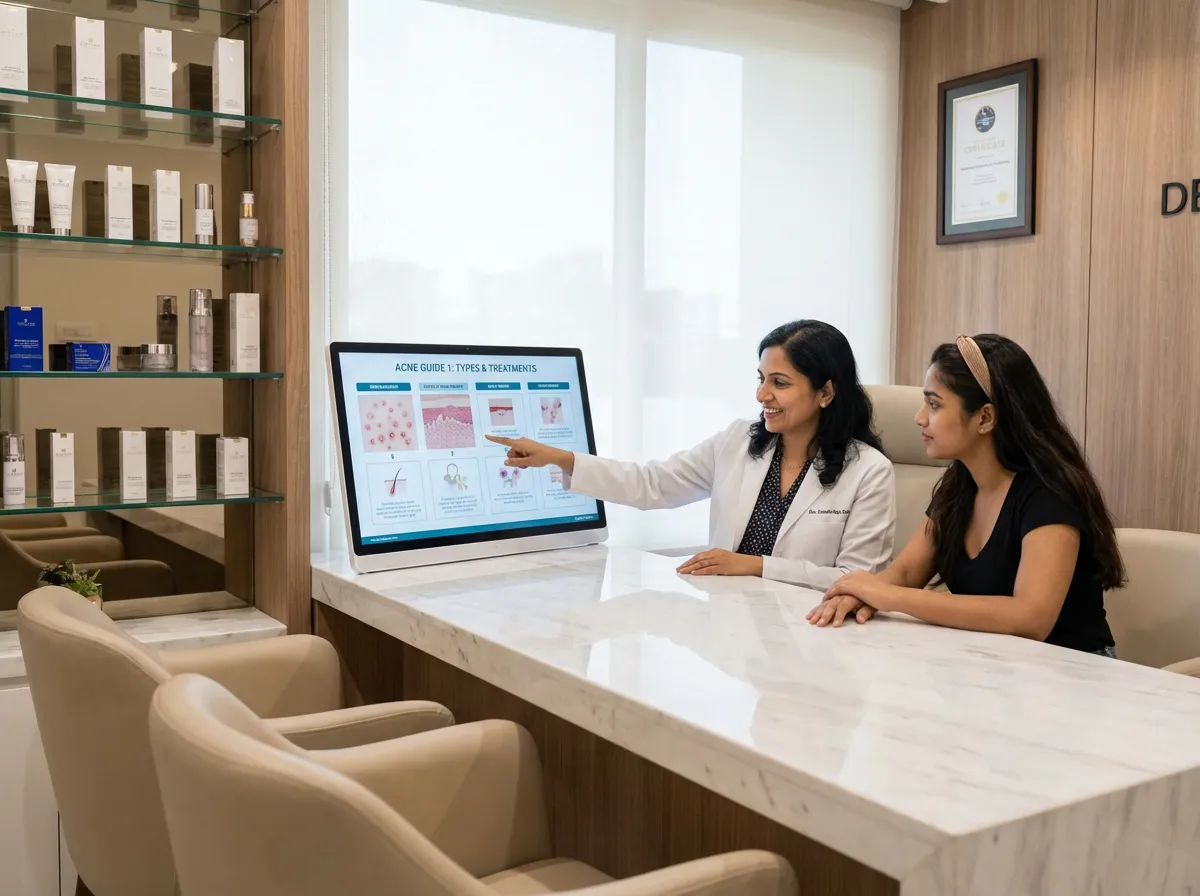
Hormonal Acne — Why Creams Alone Won't Fix It
If your acne only shows up on your jawline, gets worse before periods, and laughs at every face wash you've tried — it's hormonal. And needs hormonal treatment.
Consult Dr. AnkitaHow to Know It's Hormonal
Hormonal acne has a signature: deep, cystic breakouts on the lower face — jawline, chin, and neck. It follows your menstrual cycle, typically flaring 5-7 days before your period and calming down after. It usually starts or worsens in your mid-20s to 30s (unlike teenage acne which is more T-zone focused). And it resists — stubbornly, frustratingly — every topical product you throw at it.
The reason topicals fail is straightforward. Hormonal acne is driven by androgens (testosterone and its derivatives) stimulating the oil glands from the inside. Applying cream on the outside is like putting a band-aid on a bruise. The problem isn't where the cream can reach. The problem is in your blood.
The Hormonal Mechanism
When androgen levels spike (or when your skin is hypersensitive to normal androgen levels), sebaceous glands go into overdrive. Excess oil clogs pores. Clogged pores attract bacteria. Bacteria trigger inflammation. Deep, painful cysts form. This happens specifically on the lower face because the jawline has a higher concentration of androgen-sensitive oil glands.
PCOS is the most common underlying cause we see at Gomti Clinic — affecting roughly 1 in 5 women in India. But not all hormonal acne means PCOS. Thyroid disorders, adrenal conditions, and even stress-induced cortisol spikes can trigger the same pattern.
Testing We Recommend
- Testosterone (total and free) — elevated in PCOS and adrenal conditions
- DHEA-S — elevated in adrenal androgen excess
- Thyroid panel (TSH, T3, T4) — hypothyroidism worsens acne
- Fasting insulin and glucose — insulin resistance drives androgen production
- Pelvic ultrasound — to check for polycystic ovaries (if PCOS is suspected)
Treatment — The Combined Approach
1. Hormonal Management
This is the critical piece that most dermatology clinics skip. We coordinate with your gynecologist or endocrinologist for:
- Spironolactone (anti-androgen) — blocks testosterone at the receptor level. Takes 3-6 months to show full effect but is the gold standard for hormonal acne in women.
- Oral contraceptive pills (specific formulations with anti-androgenic progestins)
- Metformin (if insulin resistance is contributing)
2. Topical Protocol
While waiting for hormonal treatment to kick in, we use retinoids (adapalene or tretinoin), benzoyl peroxide, and niacinamide to manage active breakouts and prevent new ones.
3. In-Clinic Procedures
Salicylic acid peels monthly to unclog pores. LED blue light therapy to reduce bacterial load. Intralesional steroid injections for acute cystic flares (these flatten painful cysts within 24-48 hours — like defusing a bomb).
Frequently Asked Questions
Will my hormonal acne ever go away permanently?
If the underlying hormonal condition is managed (PCOS controlled, thyroid balanced), hormonal acne can resolve permanently. For some women, it improves naturally after pregnancy or menopause. But relying on "waiting it out" isn't a strategy — the scarring that occurs while waiting IS permanent.
Can men have hormonal acne?
Yes — though it's less cyclical. Testosterone-driven acne in men (back, shoulders, chest) is fundamentally hormonal. Treatment approaches differ (spironolactone is not used in men), but the principle of addressing the hormonal driver is the same.
Should I take Ayurvedic medicine for hormonal balance?
Some Ayurvedic preparations have value (shatavari has mild hormonal effects), but they're not potent enough for clinically significant hormonal acne. More importantly, some Ayurvedic preparations contain undisclosed steroids or heavy metals. If you want to try Ayurvedic alongside medical treatment — discuss it openly so we can watch for interactions.