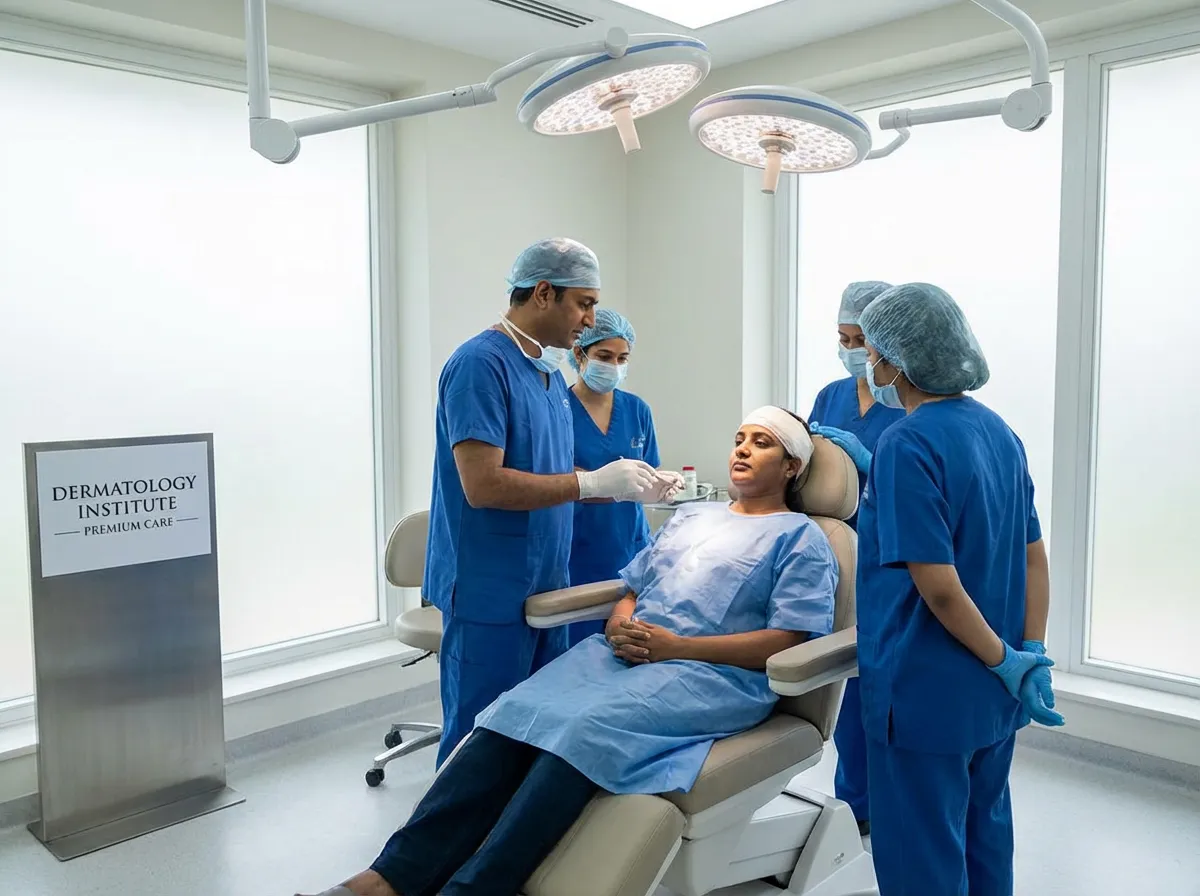
Hair Transplant in Lucknow
A permanent solution for stable hair loss — when non-surgical treatments have reached their limit.
Assess Candidacy
A permanent solution for stable hair loss — when non-surgical treatments have reached their limit.
Assess Candidacy
Let's start with what most Lucknow clinics won't tell you: if your hair loss is in early stages (Norwood 2–3), you probably don't need a transplant. Medical management with proper medication and PRP therapy can stabilize and improve your hair without surgery.
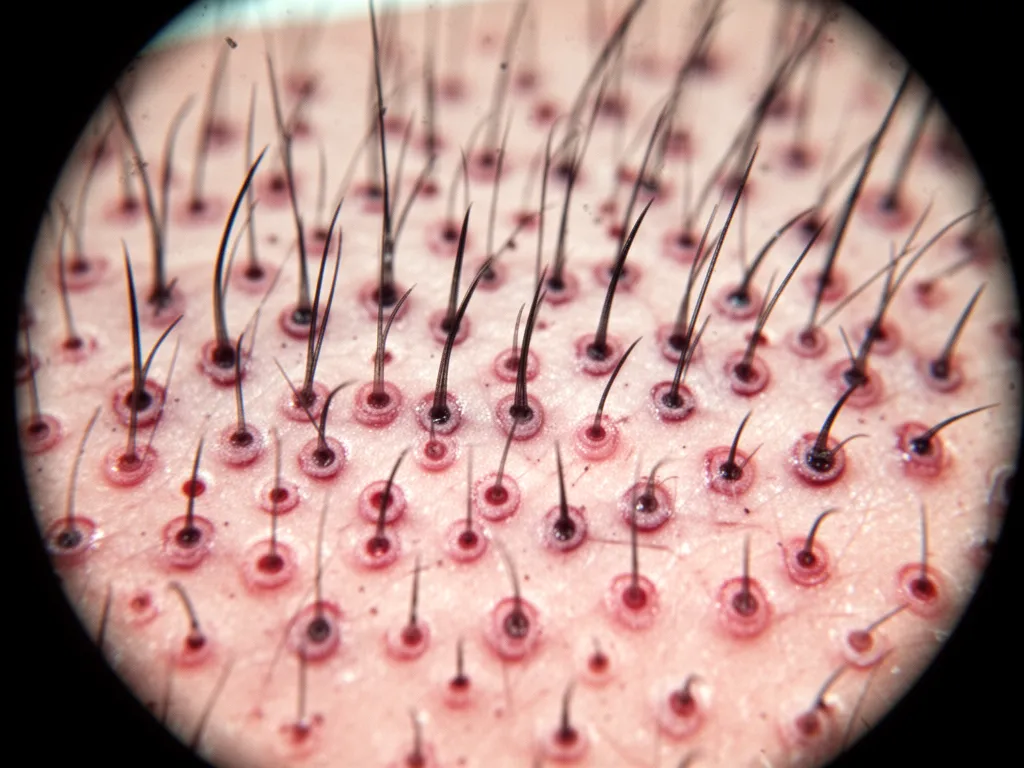
Dr. Ankita evaluates every patient with trichoscopy and blood work first. If non-surgical options haven't been tried or the hair loss isn't stable, we recommend those first — not the transplant.
| Factor | FUE | FUT |
|---|---|---|
| Method | Individual follicles extracted | Strip of scalp removed, follicles separated |
| Scarring | Tiny dot scars (nearly invisible) | Linear scar (hidden under hair) |
| Recovery | 5–7 days | 10–14 days |
| Graft count | Up to 3,000–4,000 per session | Higher graft yield per session |
| Best for | Patients who want minimal scarring | Patients needing maximum coverage |
Typically priced per graft. Details on our hair transplant cost page →
The procedure is done under local anaesthesia. You'll feel the initial numbing injections (mildly uncomfortable), then no pain during the procedure itself. Post-procedure soreness is managed with medication.