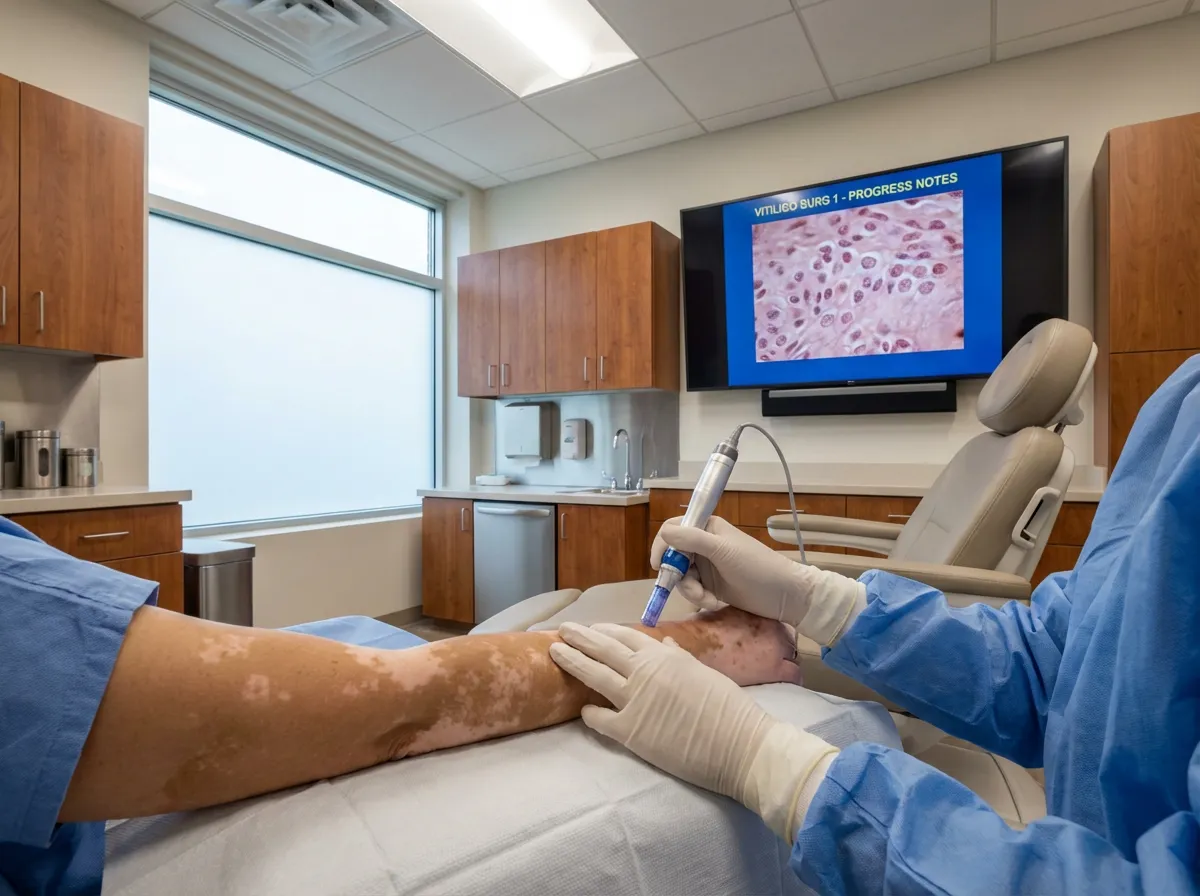
Clinical Data: Gomti Clinic has completed 1,800+ vitiligo management sessions in Lucknow with 15+ years of dermatology experience. Pricing: ₹1,500–₹4,000/session. 308nm excimer laser repigments stable patches in 15-30 sessions.
Targeted phototherapy that delivers concentrated UVB light directly to white patches — sparing
surrounding normal skin.
How Excimer Laser Works
The excimer laser (or excimer lamp) delivers a focused beam of 308nm UVB light directly to the vitiligo
patch. Unlike full-body phototherapy (narrowband UVB), the excimer targets only the affected area, allowing
higher energy doses with faster results and less exposure to surrounding skin.
Excimer vs. Narrowband UVB
Factor
Excimer Laser
Narrowband UVB
Target
Individual patches only
Entire body
Best for
Small, localized patches
Widespread vitiligo
Sessions to see results
15–30 sessions
30–60+ sessions
Frequency
2–3 times/week
2–3 times/week
Normal skin exposure
Minimal
Full body exposed
Best Candidates for Excimer
Patients with limited vitiligo — fewer than 10 patches or covering less than 10% body
surface
Facial and neck patches — these areas respond particularly well
Patients who cannot commit to full-body phototherapy sessions
Children — targeted approach minimizes unnecessary UV exposure
Treatment Protocol
Frequency: 2–3 sessions per week
Session duration: 5–15 minutes (depends on number and size of patches)
Initial response: Repigmentation dots may appear after 10–15 sessions
Full course: 30–60 sessions typically
Combination: Often used alongside topical tacrolimus for enhanced results
Realistic Outcomes
Face and neck: 60–80% repigmentation achievable in many patients
Trunk and limbs: 40–70% repigmentation
Hands and feet: Most resistant — results are less predictable
Some patches may not respond despite adequate treatment