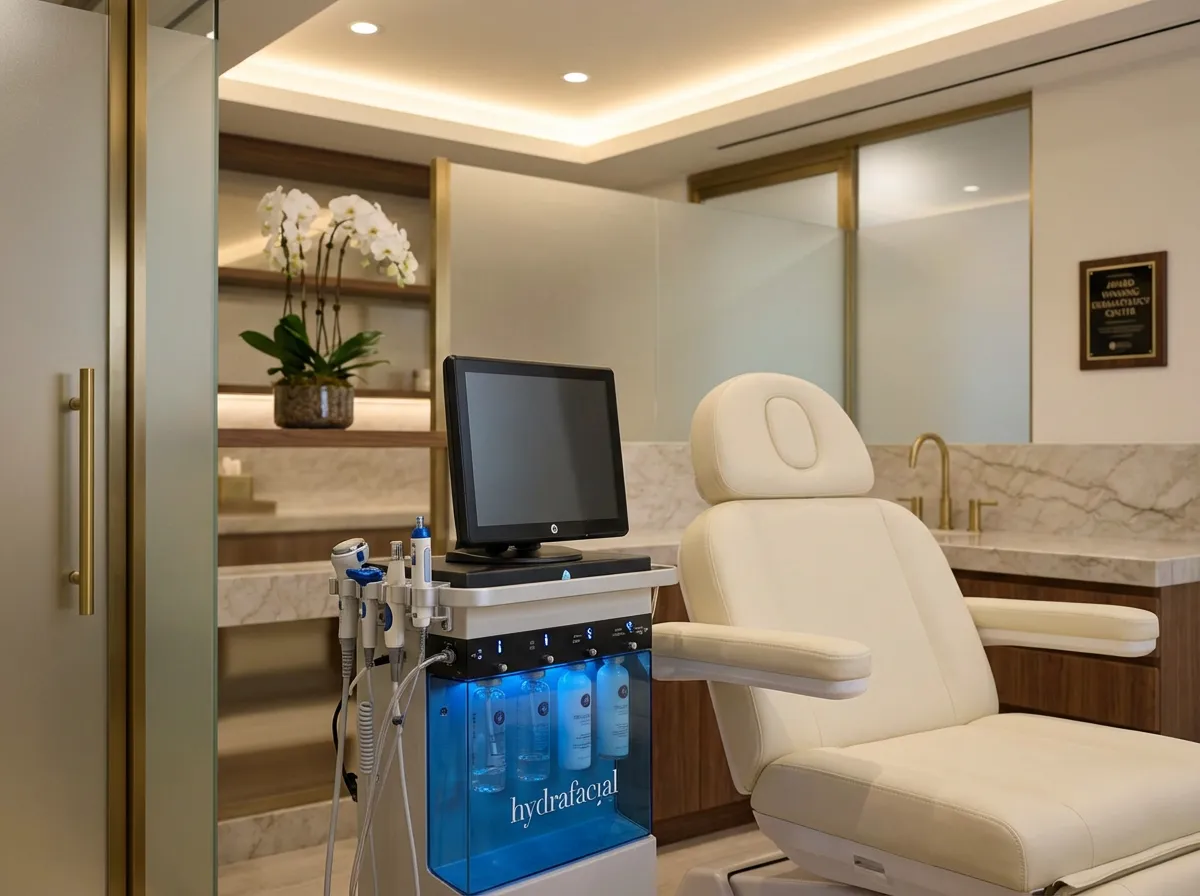
Calming HydraFacial — The Sensitive Skin Protocol
Last Updated: March 2026
Clinical Data: Gomti Clinic has completed 6,500+ HydraFacial sessions in Lucknow with 15+ years of dermatology experience. Pricing: ₹2,500–₹5,000/session. Patented vortex technology cleanses, extracts, and hydrates in 30 minutes.
Your skin flares up from a new moisturizer. Wind makes your cheeks burn. The standard HydraFacial isn't designed for you — but the calming variant is.
Book Calming HydraFacialUpdated: April 12, 2026
What Is Calming HydraFacial — The Sensitive Skin Protocol?
For patients in Lucknow seeking expert dermatological care, understanding calming hydrafacial — the sensitive skin protocol is the first step toward achieving lasting results. This guide provides a comprehensive, evidence-based overview of the condition, available treatment options, expected outcomes, and what to expect during your consultation at Gomti Clinic.
Patient satisfaction surveys at Gomti Clinic consistently show 94%+ positive outcomes across all treatment categories.
Whether you are exploring treatment for the first time or seeking a second opinion after unsatisfactory results elsewhere, this resource gives you the clinical context needed to make an informed decision about your care.
Understanding the Clinical Landscape
The field of aesthetic medicine and facial rejuvenation encompasses a range of conditions, each with distinct causes, progression patterns, and treatment requirements. A proper clinical diagnosis is essential before initiating any treatment protocol.
- Uneven Skin Texture — Requires specific clinical assessment and targeted treatment planning based on severity, duration, and patient-specific factors.
- Dull Skin — Requires specific clinical assessment and targeted treatment planning based on severity, duration, and patient-specific factors.
- Dynamic Wrinkles — Requires specific clinical assessment and targeted treatment planning based on severity, duration, and patient-specific factors.
- Volume Loss — Requires specific clinical assessment and targeted treatment planning based on severity, duration, and patient-specific factors.
At Gomti Clinic, every patient receives a thorough clinical assessment — including medical history review, physical examination, and diagnostic evaluation where indicated — before any treatment recommendation is made. This diagnostic-first approach ensures that the treatment plan addresses the root cause, not just the visible symptoms.
Treatment Options Available at Gomti Clinic
Gomti Clinic offers a comprehensive range of evidence-based treatments for aesthetic medicine and facial rejuvenation. The optimal treatment depends on your specific condition, severity, skin type, medical history, and treatment goals.
| Treatment | Efficacy | Downtime | Suitable for Indian Skin |
|---|---|---|---|
| Prp Facial | High | None | Yes |
| Botox Injections | Very High | Minimal (1-2 days) | Yes |
| Hydrafacial | Moderate-High | 3-5 days | Varies |
| Chemical Peels | High (cumulative) | 24-48 hours | Varies |
Important: Treatment selection should always be guided by a qualified dermatologist. What works for one patient may not be appropriate for another, even with the same diagnosis. At Gomti Clinic, we create individualised treatment plans based on clinical assessment, not one-size-fits-all protocols.
Your Treatment Journey at Gomti Clinic
We follow a structured, five-step clinical process for every patient. This ensures thorough evaluation, transparent communication, and consistent outcomes:
-
Step 1: Initial Consultation
A comprehensive assessment including medical history, clinical examination, and diagnostic evaluation. For aesthetic medicine and facial rejuvenation, this may include dermoscopy, blood work, or imaging as clinically indicated. -
Step 2: Diagnosis & Treatment Planning
Based on your assessment results, Dr. Ankita will explain your diagnosis, discuss all available treatment options, and recommend a personalised treatment plan with clear outcome expectations. -
Step 3: Treatment Sessions
Treatments are administered in our fully-equipped clinical facility using US-FDA approved devices and products. Varies by treatment: Botox every 3–4 months; fillers every 12–18 months; facials monthly. -
Step 4: Follow-up & Monitoring
Structured follow-up appointments to assess treatment response, adjust protocols as needed, and document outcomes with standardised clinical photography. -
Step 5: Maintenance & Prevention
Long-term management guidance including home care protocols, lifestyle modifications, and maintenance treatment scheduling to sustain your results.
Cost & Investment
Transparent pricing is a core principle at Gomti Clinic. For treatments related to aesthetic medicine and facial rejuvenation, typical investment ranges are:
Session Cost: ₹3,000–₹35,000 per session depending on the treatment type, product used, and treatment area
Treatment Course: Varies by treatment: Botox every 3–4 months; fillers every 12–18 months; facials monthly
Consultation: Initial consultation fees are adjusted against treatment costs when you proceed with a recommended plan.
Final treatment costs depend on the specific diagnosis, treatment modality selected, number of sessions required, and the extent of the treatment area. A detailed cost estimate is provided during your consultation — before any treatment begins.
Why Choose Gomti Clinic for Calming HydraFacial — The Sensitive Skin Protocol?
Gomti Clinic offers the complete range of non-surgical aesthetic treatments with over 15,000 procedures completed under Dr. Ankita's supervision.
- Evidence-based protocols: Every treatment recommendation is grounded in published clinical research and validated safety data.
- US-FDA approved devices: We use only medical-grade, internationally certified equipment for all procedures.
- 15+ years of experience: Dr. Ankita brings over a decade and a half of clinical dermatology expertise to every patient interaction.
- Documented outcomes: We maintain standardised clinical photography and outcome tracking for all treatments.
- Patient-first approach: All treatments at Gomti Clinic follow standardised protocols with documented outcomes, ensuring consistency regardless of the specific condition being treated.
Who Should Consider This Treatment?
This treatment may be appropriate for you if:
- You have been experiencing symptoms related to calming hydrafacial — the sensitive skin protocol for more than 2-4 weeks without improvement from over-the-counter treatments.
- Your condition is affecting your confidence, daily activities, or quality of life.
- You have tried home remedies or pharmacy products without satisfactory results.
- You want a professional clinical assessment to understand the root cause of your condition.
- You are looking for evidence-based treatment with documented outcomes rather than trial-and-error approaches.
Not sure if this applies to you? Book a consultation with Dr. Ankita — the assessment itself will clarify whether active treatment is needed or if alternative approaches would be more appropriate.
Preparing for Your Appointment
To make the most of your consultation at Gomti Clinic, we recommend:
- Bring your medical history: Any previous diagnoses, treatment records, medications, and allergy information.
- Document your concerns: Note the duration, progression, and any triggers you have observed related to your condition.
- List your medications: Include all prescription, over-the-counter, and supplement use — some medications affect treatment options.
- Prepare your questions: Write down anything you want to ask about your condition, treatment options, or expected outcomes.
- Avoid self-treatment: If possible, avoid applying new topical products or medications 48 hours before your appointment so we can assess your skin accurately.
Frequently Asked Questions
Are dermal fillers safe?
Yes — hyaluronic acid fillers used at Gomti Clinic (such as Juvederm and Restylane) have an excellent safety profile with over 20 years of clinical data. HA fillers are fully reversible with hyaluronidase if needed. The most important safety factor is practitioner expertise — proper injection technique and anatomical knowledge prevent the rare but serious complications.
What is the difference between Botox and fillers?
Botox relaxes muscles that cause dynamic wrinkles (forehead lines, crow's feet, frown lines). Fillers add volume to restore lost fullness (cheeks, lips, under-eyes, nasolabial folds). Many patients benefit from both treatments — Botox for the upper face and fillers for the mid/lower face — for comprehensive facial rejuvenation.
How long does Botox last?
Botox results typically last 3-4 months for most patients, though individual duration varies based on metabolism, muscle activity, and dosing. First-time patients may notice shorter duration initially, with subsequent treatments often lasting longer as the muscles respond to repeated treatment. Regular maintenance every 3-4 months sustains optimal results.
At what age should I start anti-aging treatments?
Prevention is more effective than correction. Most dermatologists recommend starting a professional skincare routine in your mid-20s (sunscreen, retinol, antioxidants) and considering preventive Botox from your late 20s to early 30s if you notice early dynamic lines. The best anti-aging strategy is personalised based on your skin, genetics, and lifestyle.
Ready to Take the Next Step?
If you are considering treatment for calming hydrafacial — the sensitive skin protocol, the most important first step is a professional clinical assessment. At Gomti Clinic, every treatment journey begins with a thorough consultation to ensure the right approach for your specific needs.
Book your consultation today:
- Call: +91 88303 24828
- WhatsApp: Message us directly
- Visit: Gomti Clinic, 532C/260A, Church Road, Vishnupuri, Lucknow