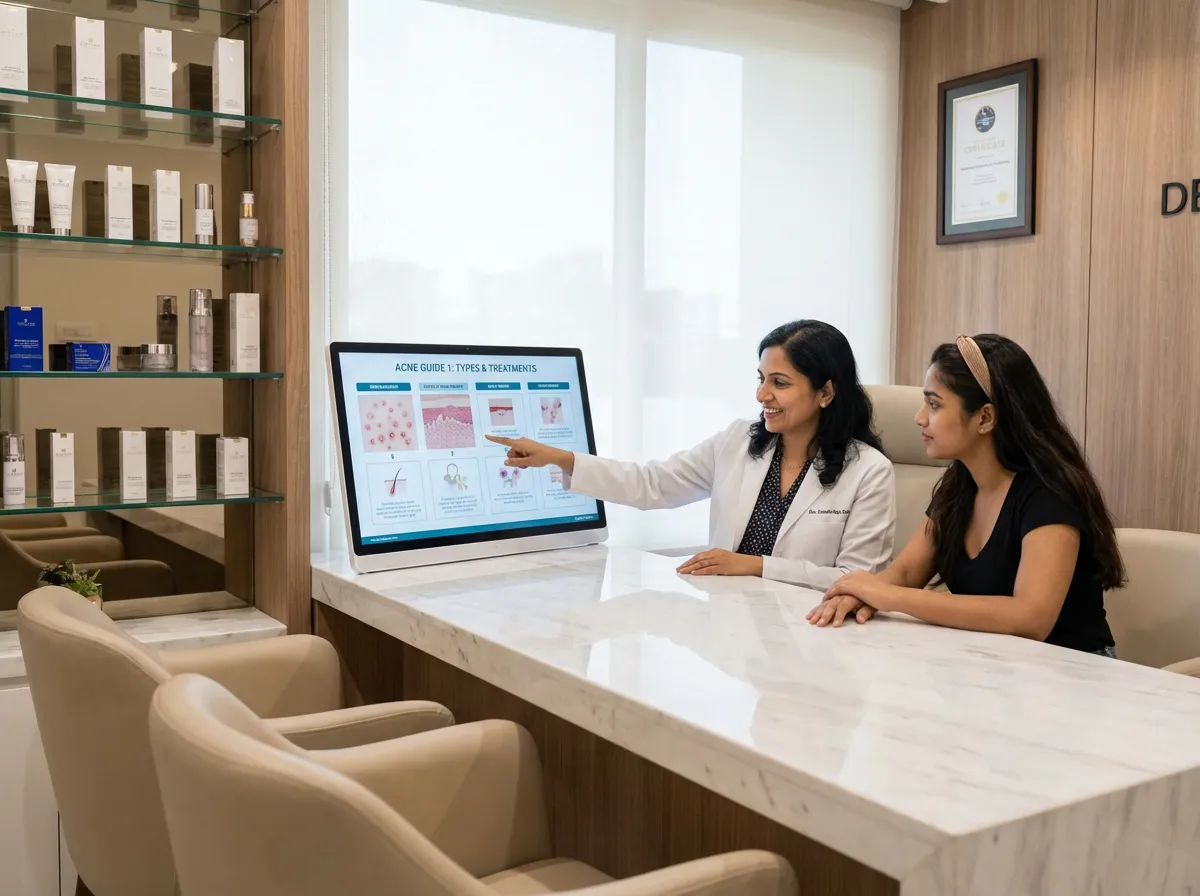
Best Acne Treatment in Lucknow — The Evidence-Based Approach
Your aunt's turmeric paste didn't work. The ₹500 cream from the chemist made it worse. Here's what actually clears acne — and why.
Consult Dr. AnkitaWhy Your Current Acne Treatment Isn't Working
The average acne patient we see at Gomti Clinic has already tried 5-7 products before walking in. Face washes with salicylic acid. Benzoyl peroxide from the chemist. Tea tree oil because someone on Instagram said so. Neem paste because their grandmother insisted. And occasionally — terrifyingly — steroid creams purchased over the counter that made the acne temporarily better but permanently worse.
Here's the thing about acne — it has multiple causes, and treating the wrong cause is like fixing a flat tire when the engine is broken. The car still doesn't move. Lucknow's environmental factors make this worse: hard water damages the skin barrier, humidity feeds bacterial growth, pollution clogs pores. Your treatment needs to account for ALL of these. A generic face wash doesn't.
Types of Acne We Treat
| Type | What It Looks Like | Severity | Treatment Approach |
|---|---|---|---|
| Comedonal | Blackheads, whiteheads | Mild | Topical retinoids + chemical peels |
| Inflammatory | Red, painful papules and pustules | Moderate | Oral antibiotics + topicals + peels |
| Cystic | Deep, painful nodules under skin | Severe | Isotretinoin + medical care |
| Hormonal | Jawline/chin breakouts, cyclical | Variable | Hormonal management + topicals |
Dr. Ankita's Protocol — Not a One-Size-Fits-All
Step 1: Skin assessment — determining acne type, severity, and underlying causes. We check for hormonal markers if the pattern suggests PCOS or thyroid involvement. Step 2: Customized topical regimen — not random products, but a specific sequence of cleanser, active ingredient (retinoid or adapalene), and moisturizer chosen for YOUR skin type and acne type. Step 3: In-clinic procedures if needed — chemical peels, comedone extraction, LED therapy. Step 4: Follow-up at 4-6 weeks to assess response and adjust.
The patients who fail are usually the ones who skip step 4. Acne treatment isn't a one-visit fix. It's a 3-6 month process of adjustment, monitoring, and patience. Anyone promising clear skin in 2 weeks is either lying or selling you steroids (which will clear acne temporarily but destroy your skin permanently).
The Hard Water Problem in Lucknow
Lucknow water is hard — high mineral content (calcium and magnesium) that leaves residue on skin. This residue clogs pores and disrupts the skin's pH. Patients from Aliganj and Indira Nagar consistently report worse breakouts during summer when they wash their face more frequently (more hard water exposure). Counter-intuitively, washing your face LESS with hard water and using micellar water or filtered water for cleansing can improve acne.
Frequently Asked Questions
Does diet affect acne?
Dairy and high-glycemic foods (white bread, sugar, processed foods) have clinical evidence linking them to acne. Chocolate? The evidence is weak. Oily food? Doesn't directly cause acne (that's a myth). We recommend a low-dairy, low-sugar diet as a supportive measure — not as a treatment by itself.
Should I pop my pimples?
No. Squeezing pushes bacteria deeper, causing more inflammation and scarring. If you have a large, painful pimple that needs to be drained — come to the clinic. We do it sterilely under proper conditions. Your bathroom mirror is not an operating theatre.
Why does my acne get worse before it gets better with retinoids?
The purging phase. Retinoids accelerate skin cell turnover, which pushes existing comedones (blocked pores) to the surface faster. This looks like new breakouts but it's actually clearing old ones. It lasts 4-6 weeks and then dramatically improves. Most patients who quit retinoids do so during the purge — right before it would have started working.